Web
System Management — Cloud-Based HR Management Platform
A cloud-based HR management platform designed to streamline employee management, attendance, leave, payroll, performance, and everyday human resources workflows.
- Evidence
- Verified work
- Role
- full project
- Timeline
- Mar 2024
- Category
- Web
Overview
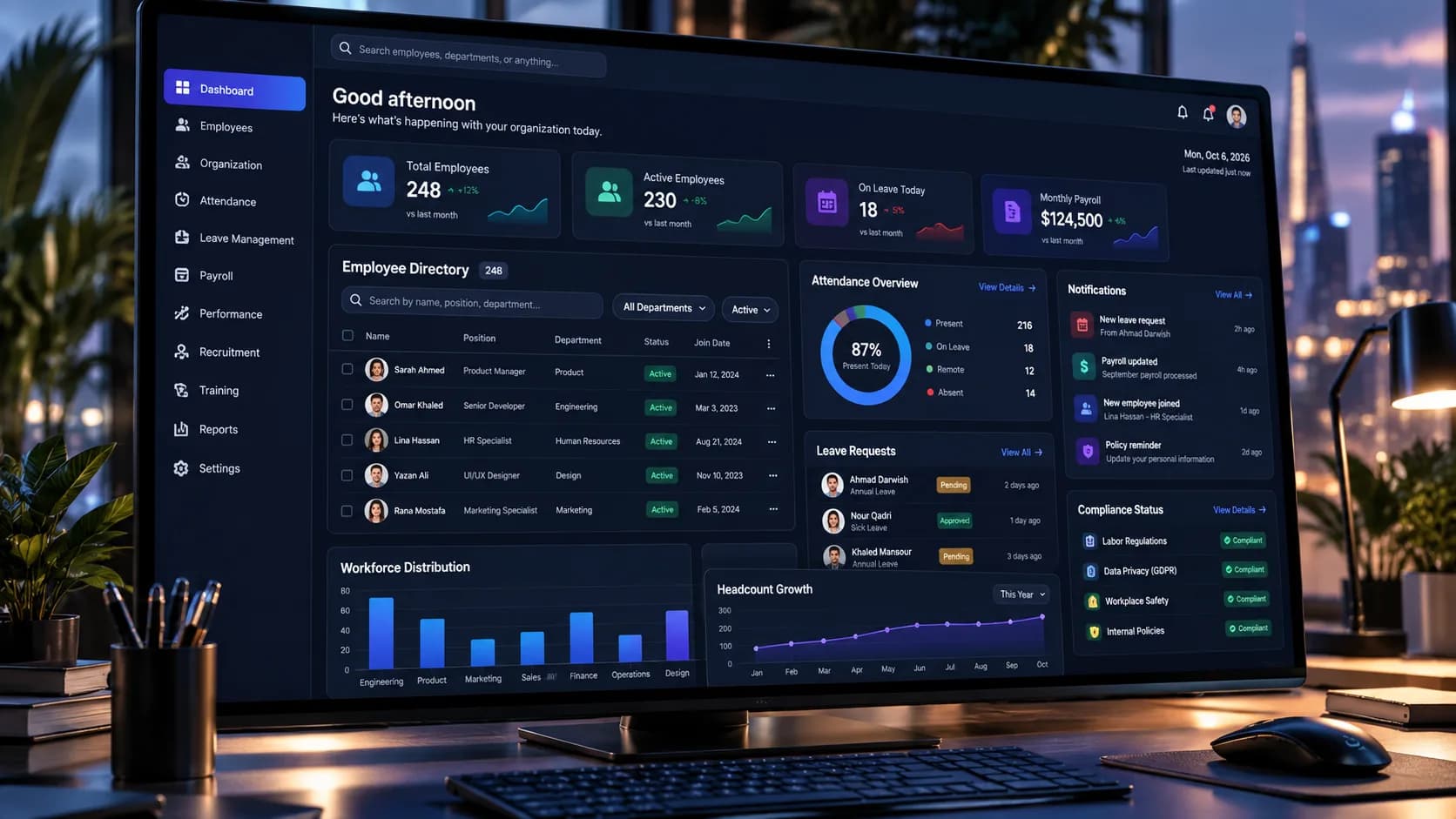
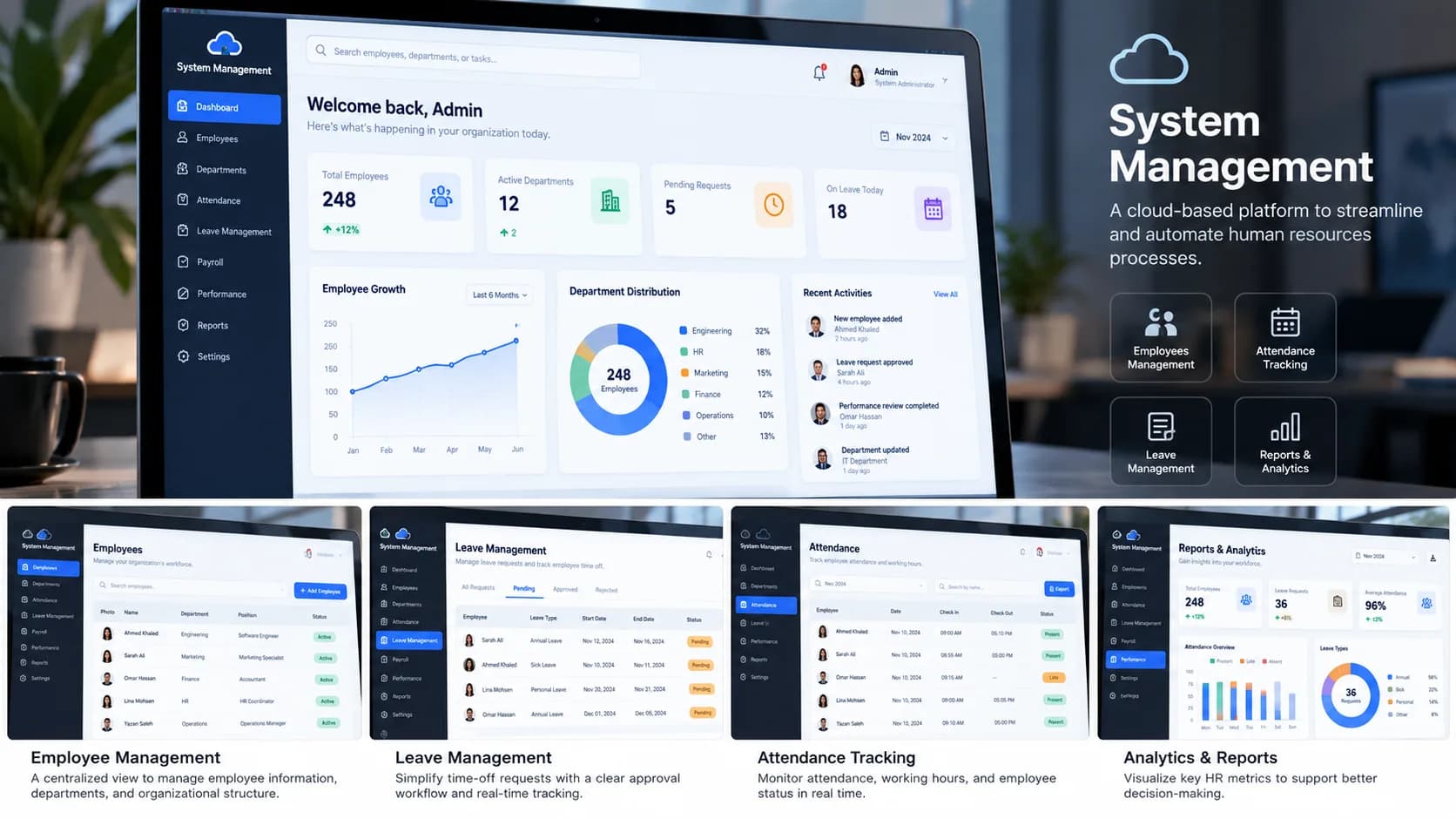
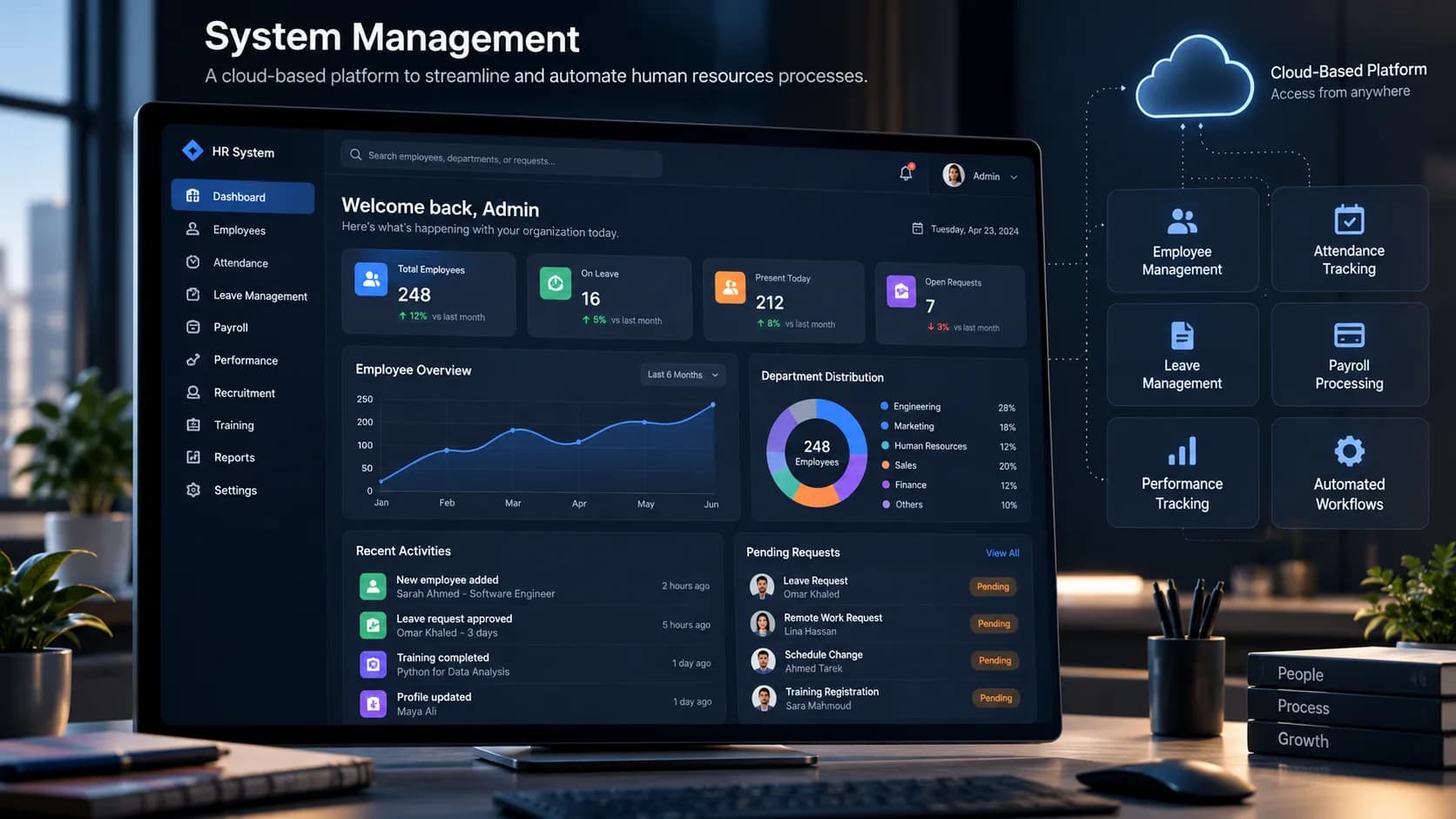
System Management is a cloud-based human resources platform designed to centralize and streamline workforce management processes within a single digital environment.
The platform brings core HR activities into one place, helping organizations manage employee information, attendance, leave, payroll, performance, recruitment, training, and reporting through structured workflows and a unified administrative interface.
The main goal is to reduce fragmented HR processes and provide organizations with a clearer, more efficient way to manage workforce information.
Problem
Human resources teams often work with multiple processes that are closely connected but handled separately.
Employee records, attendance, leave requests, payroll information, performance data, recruitment, and reporting can become difficult to manage when information is distributed across different systems or manual workflows.
This creates several practical problems:
- Scattered employee information
- Repetitive administrative work
- Limited visibility into workforce activity
- Manual approval processes
- Difficulty tracking attendance and leave
- Time-consuming reporting
- Inconsistent HR data
The project addresses this problem by bringing these core HR workflows into a centralized cloud-based platform.
Constraints
The project was designed around the core requirements of a cloud-based HR management platform, rather than attempting to reproduce every capability of a large enterprise HR suite.
Key constraints included:
- Keeping HR workflows understandable
- Avoiding unnecessary complexity
- Centralizing multiple HR functions
- Maintaining a consistent user experience
- Supporting structured administrative workflows
- Designing the platform for cloud-based access
- Providing meaningful management visibility through dashboards
- Creating an architecture that can support future expansion
The focus was on establishing a strong foundation for workforce management rather than building every possible enterprise HR feature.
Approach
The platform was designed around the idea of creating a single source of truth for workforce management.
Instead of building isolated HR tools, the system connects multiple processes through a unified platform:
Employees → Attendance → Leave → Payroll → Performance → Recruitment → Training → Reporting
The approach emphasizes:
- Centralized employee records
- Structured HR workflows
- Dashboard-driven visibility
- Automated administrative processes
- Consistent data across HR modules
- Searchable and filterable information
- Management dashboards and reporting
- A scalable cloud-based architecture
This creates a connected HR experience where information can move naturally between related processes.
Architecture
The platform follows a modular HR management architecture:
Users → HR Platform → Workforce Modules → Centralized Data → Reporting & Analytics
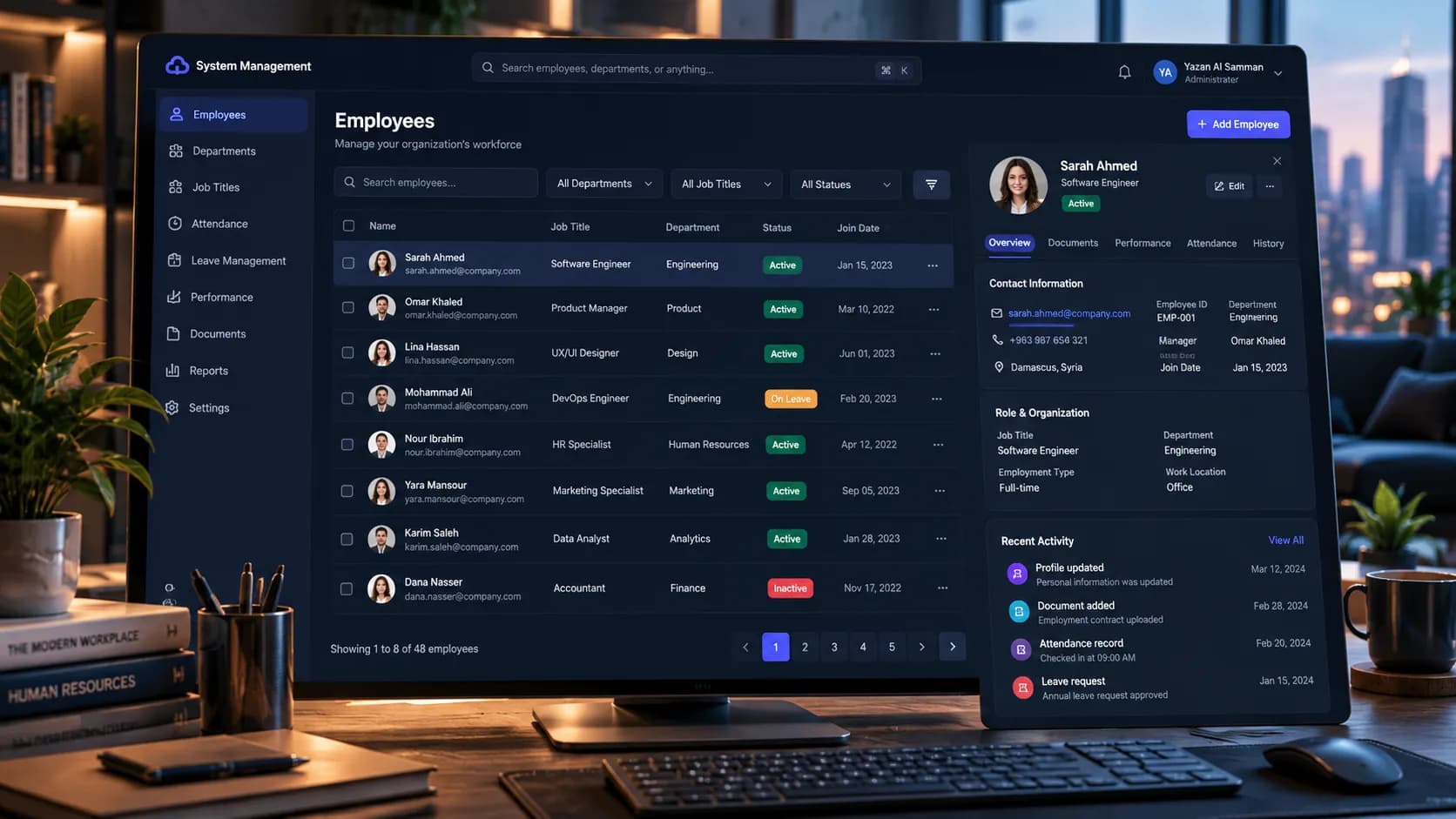
Employee Management
The employee module acts as the foundation of the system, maintaining structured workforce information and organizational relationships.
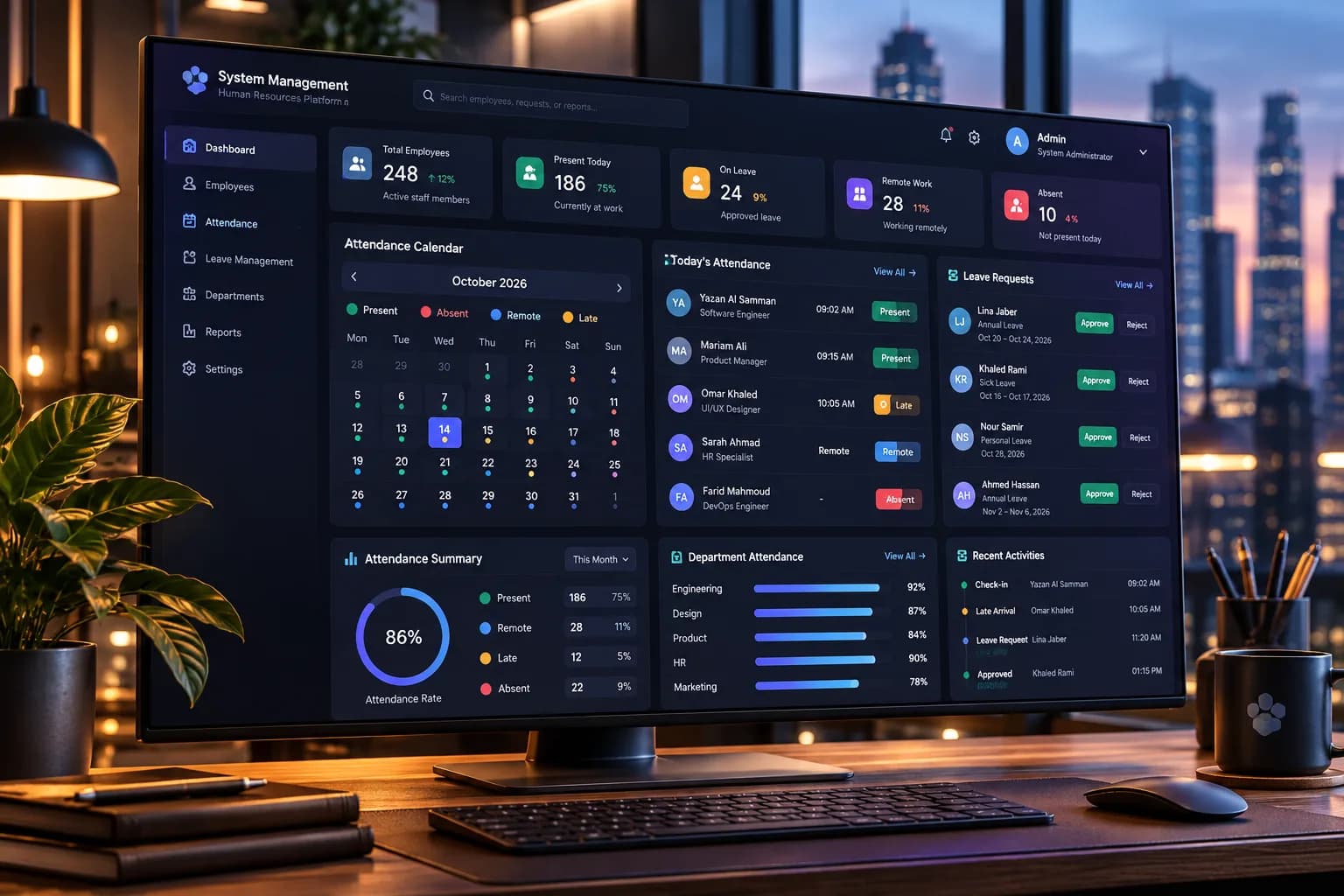
Attendance Management
Tracks workforce attendance and provides visibility into employee presence, absence, and working patterns.
Leave Management
Provides structured workflows for submitting, reviewing, approving, and tracking employee leave requests.
Payroll
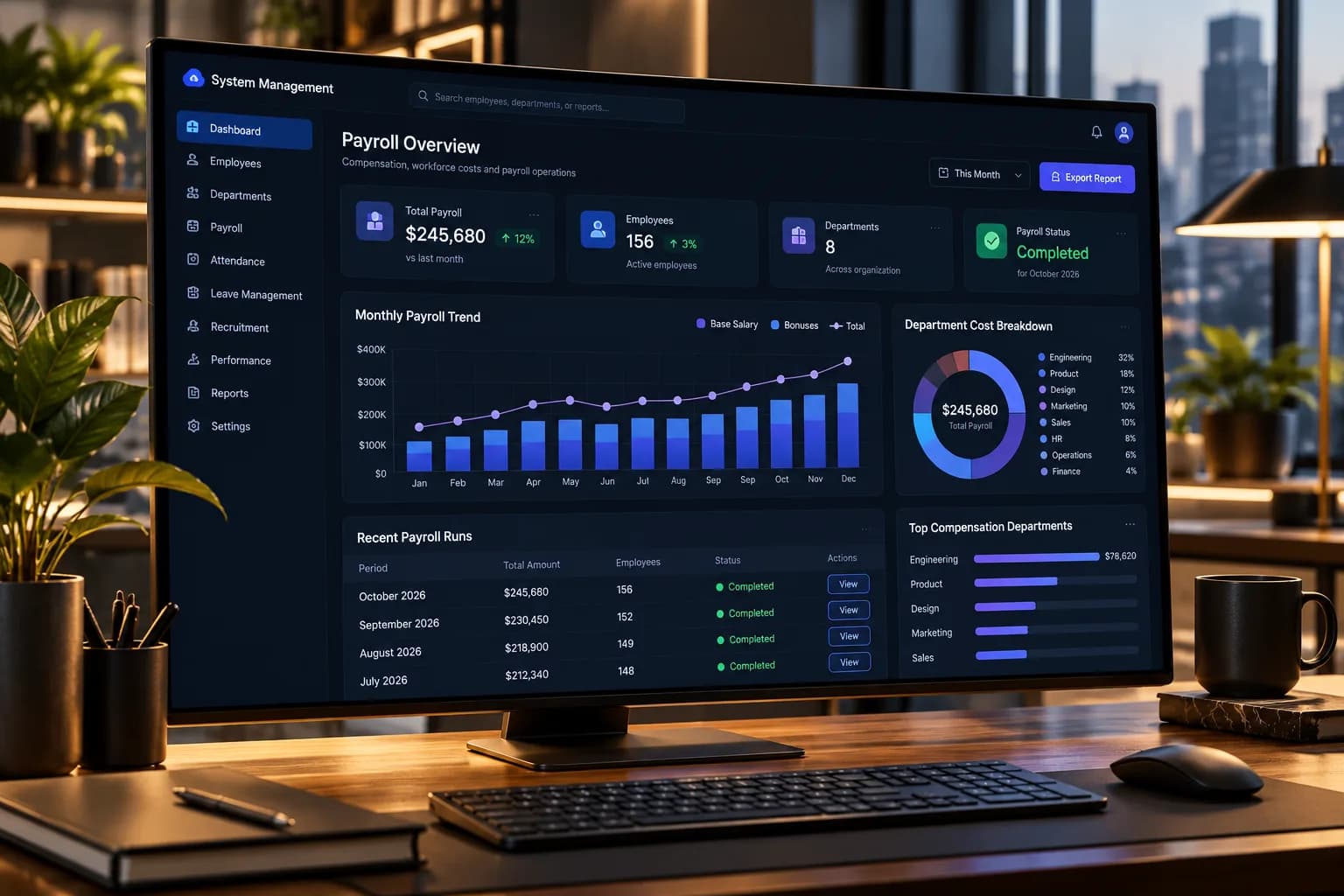
Connects workforce information with compensation and payroll-related processes.
Performance Management
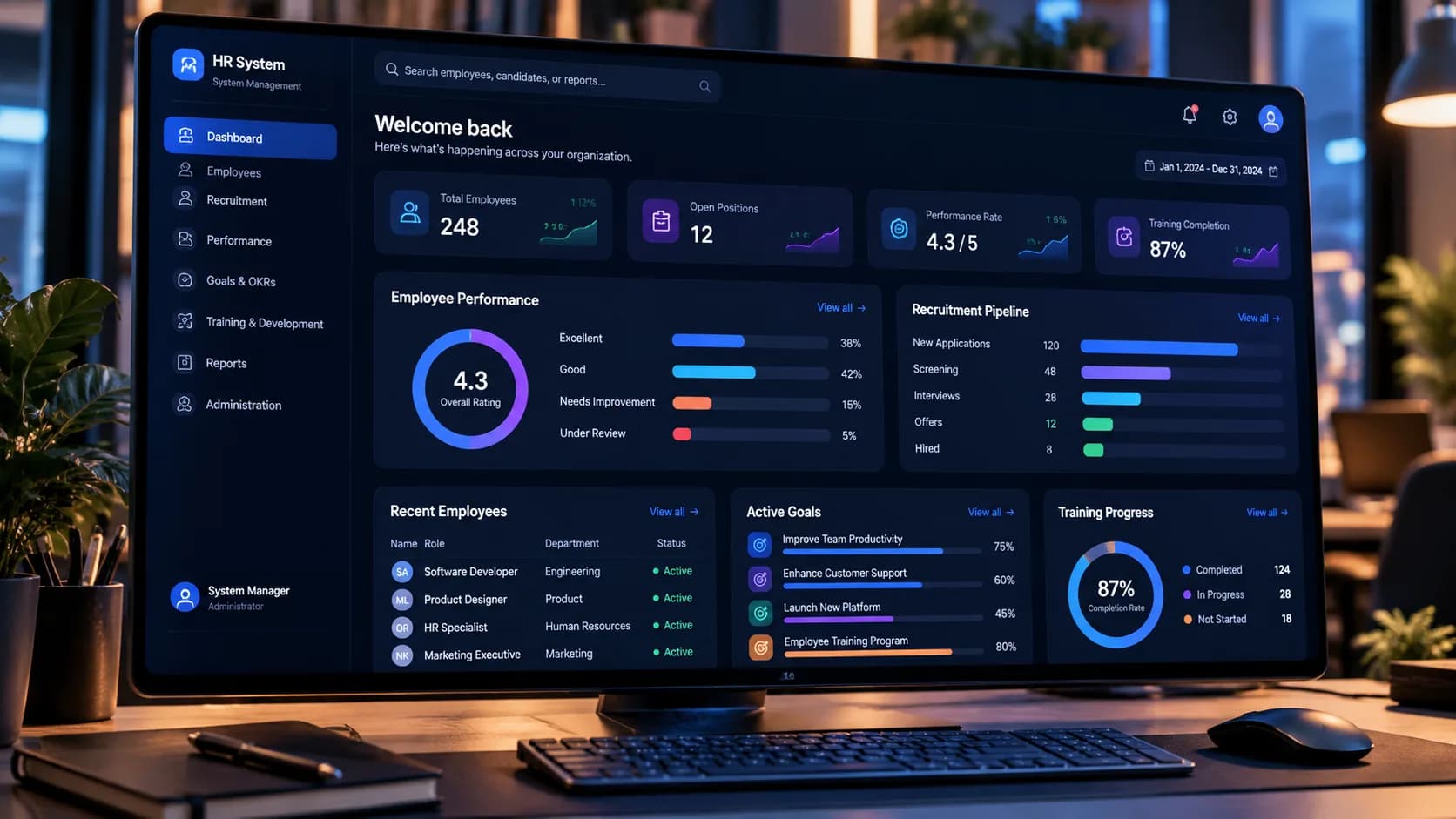
Provides a structured area for monitoring employee performance and organizational development.
Recruitment & Training
Supports workforce lifecycle processes beyond day-to-day administration, including hiring and employee development.
Reporting & Analytics
Aggregates HR information into dashboards and reports that provide management-level visibility into workforce activity.
Cloud Platform Layer
The cloud-based foundation allows the different modules to operate as one centralized system rather than disconnected applications.
Intelligence layer
The intelligence layer is primarily based on business rules, workflow automation, data aggregation, and HR analytics, rather than machine learning.
The system can derive useful operational intelligence through:
Workflow Automation
Administrative processes can follow predefined states and approval flows, reducing repetitive manual coordination.
Data Aggregation
Information from different HR modules can be combined to provide organization-level metrics.
Workforce Analytics
Employee, attendance, payroll, and performance information can be transformed into dashboards and trends.
Rule-Based Processing
Business rules can determine workflow states, approvals, statuses, and other HR operations.
Operational Insights
Dashboards turn raw HR records into information that is easier for administrators and managers to monitor.
This approach creates a practical intelligence layer without requiring an AI model.
Engineering decisions
Modular HR Architecture
HR functionality is separated into distinct modules while maintaining a shared platform foundation. This makes the system easier to maintain and extend.
Centralized Workforce Data
Employee information serves as a common foundation for related HR processes, reducing duplication and fragmented records.
Workflow-Oriented Design
Processes such as leave requests and administrative actions are represented as structured workflows rather than unstructured manual operations.
Dashboard-First Visibility
Important workforce metrics and pending actions are surfaced through dashboards so administrators can understand system activity quickly.
Search and Filtering
HR systems can contain large datasets, so searchable and filterable interfaces are essential for efficient workforce management.
Cloud-Based Architecture
A cloud-oriented design allows the platform to serve as a centralized HR environment rather than a locally isolated application.
Extensibility
The modular structure provides room for future capabilities such as advanced analytics, employee self-service, notifications, integrations, audit trails, and more sophisticated automation.
Challenges
1. Connecting Multiple HR Workflows
Employee management, attendance, leave, payroll, and performance are not independent systems. Designing the platform required thinking about how these areas interact while keeping each module understandable.
2. Centralizing Workforce Information
A large HR platform can contain substantial amounts of employee and organizational information. The challenge was to present this information without creating an overwhelming interface.
3. Automating Administrative Processes
Many HR operations involve repetitive actions and approval workflows. Turning these processes into structured digital workflows requires clearly defined states, rules, and transitions.
4. Maintaining Data Consistency
Changes to employee information can affect multiple HR areas. Keeping related information synchronized is an important architectural challenge in a centralized HR system.
5. Designing Actionable Dashboards
HR dashboards should provide more than raw numbers. The interface needs to surface workforce metrics, pending actions, trends, and operational information in a way that supports day-to-day management.
6. Handling Different HR Responsibilities
Different users may interact with different parts of the system. Designing the platform around distinct HR responsibilities requires clear navigation, permissions, and workflow boundaries.
7. Building for Cloud-Based Access
A cloud HR platform needs to be designed around reliable access to centralized information while maintaining appropriate security and data-management practices.
Results
The project establishes a centralized cloud-based HR management platform that brings key workforce processes together within one system.
It provides a foundation for managing:
- Employee information
- Organizational structures
- Attendance
- Leave
- Payroll
- Performance
- Recruitment
- Training
- Reports and analytics
The result is a more structured approach to HR administration, replacing fragmented workflows with a unified digital environment.
The architecture also provides a foundation for future development toward more advanced capabilities such as employee self-service, workflow automation, third-party integrations, advanced workforce analytics, notifications, and enterprise-level access control.
Media
Related projects
Web
yazanalsamman.com — Cinematic Portfolio Platform
This website: a bilingual, CMS-driven portfolio with a scroll-driven WebGL narrative, strict performance budgets, accessibility and SEO verification, and a containerised VPS deployment.
Stack
Web
Tabkha & More — Interactive Digital Menu and CMS
A bilingual interactive menu and restaurant CMS: React on Vite, a Hono API with Neon Postgres and Drizzle, session-authenticated admin, media uploads and a CI pipeline.
Stack
Web
NewLook — Branded Footwear E-Commerce Platform
A responsive e-commerce platform for branded footwear: WhatsApp OTP sign-up, map-based local delivery or governorate shipping, two currencies, and an admin panel for products, brands, delivery areas and orders.
Stack