Mobile
Taxi Elite Application — Taxi Booking & Car Rental Mobile App
A mobile taxi booking and car rental application designed to simplify ride booking, vehicle selection, real-time trip tracking, payments, and rental management.
- Evidence
- Verified work
- Role
- full project
- Category
- Mobile
Overview
Taxi Elite Application is a mobile platform designed to provide users with a convenient way to book taxis, select suitable vehicles, manage trips, and access car rental services from a single application.
The experience brings together location-based ride booking, vehicle selection, trip tracking, payment management, and rental workflows into a unified mobile interface.
The project focuses on making transportation services accessible through a clear and streamlined digital experience.
Problem
Traditional taxi booking and rental processes can involve phone calls, manual coordination, unclear vehicle availability, and limited visibility into the status of a trip.
Users need a faster way to:
- Find available taxis
- Choose an appropriate vehicle
- Specify pickup and destination locations
- Understand estimated pricing
- Book a ride
- Track the vehicle in real time
- Manage payments
- Review previous trips
- Rent vehicles for longer periods
The challenge was to bring these different transportation workflows into one mobile application while keeping the booking process simple.
Constraints
The project was designed as a mobile transportation platform, with the primary focus on the customer-facing experience rather than building the entire infrastructure of a large ride-hailing company.
Key constraints included:
- Keeping ride booking straightforward
- Supporting location-based workflows
- Presenting vehicle information clearly
- Maintaining understandable booking states
- Designing for mobile-first interaction
- Supporting both taxi and rental workflows
- Keeping the interface visually consistent
- Creating an architecture that can accommodate real-time services later
The goal was to establish a strong foundation for transportation booking rather than reproduce every operational component of a commercial ride-hailing ecosystem.
Approach
The application was designed around the complete transportation journey:
Location → Vehicle Selection → Booking → Confirmation → Live Tracking → Trip Completion
The platform combines two related experiences:
Taxi Booking
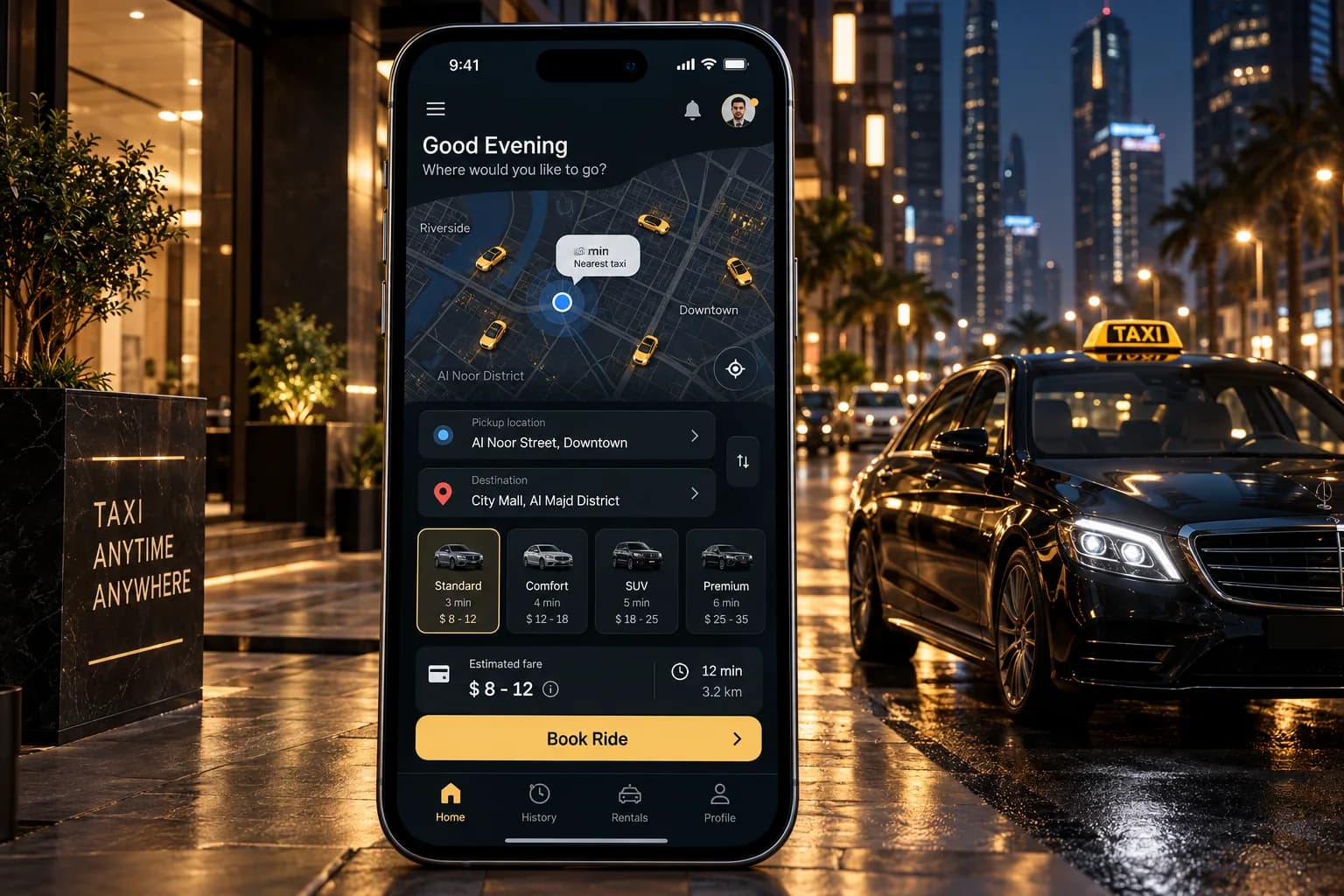
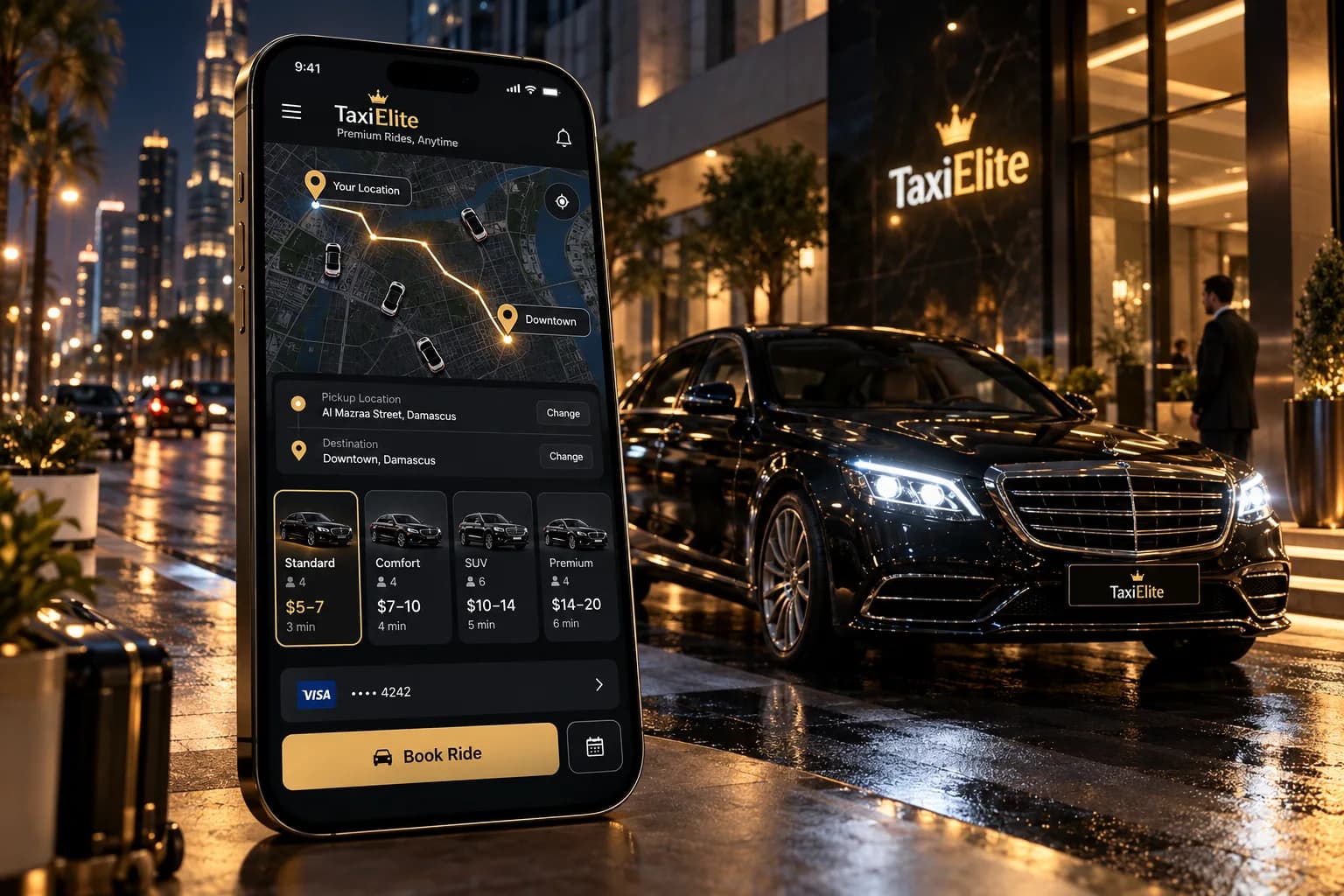
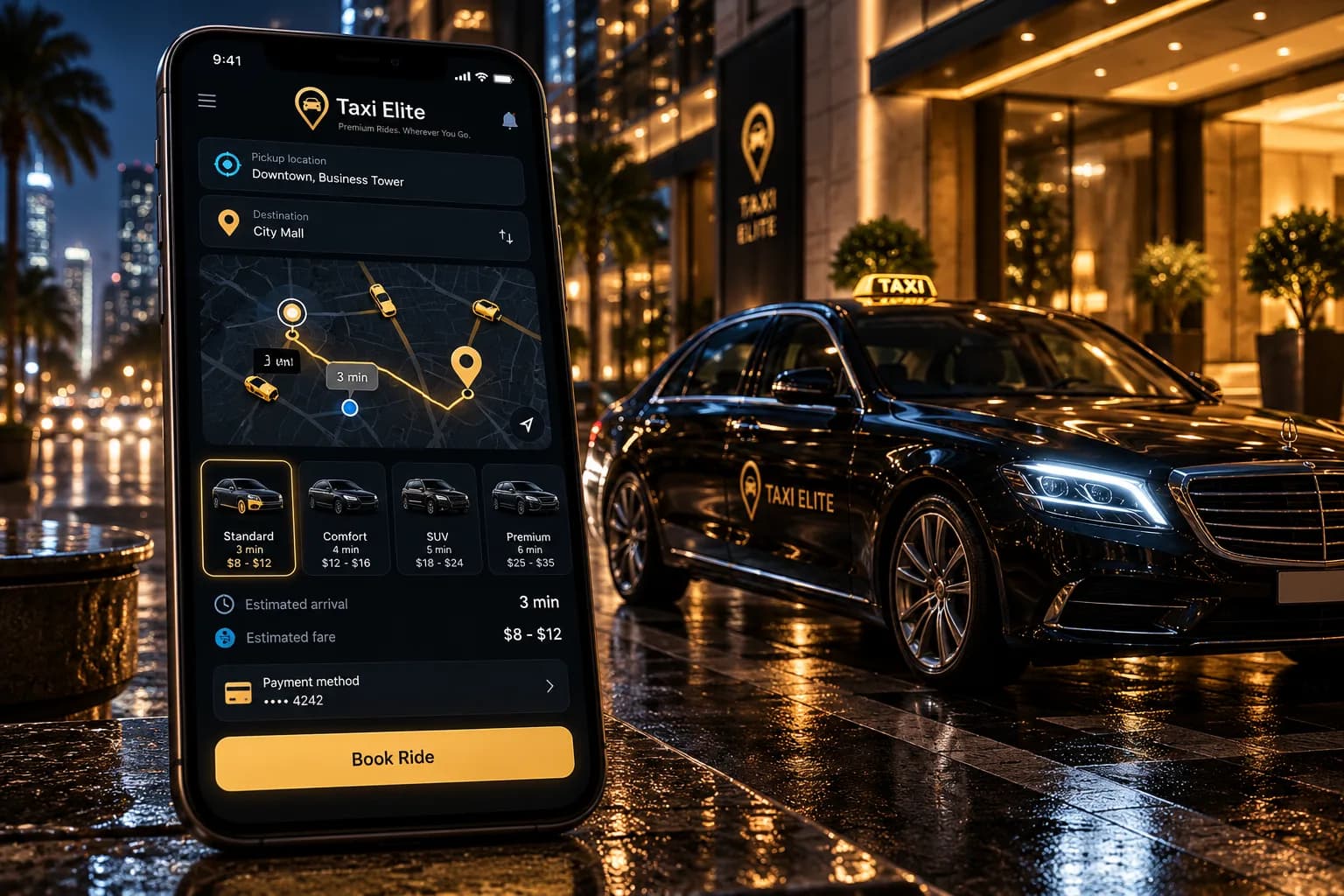
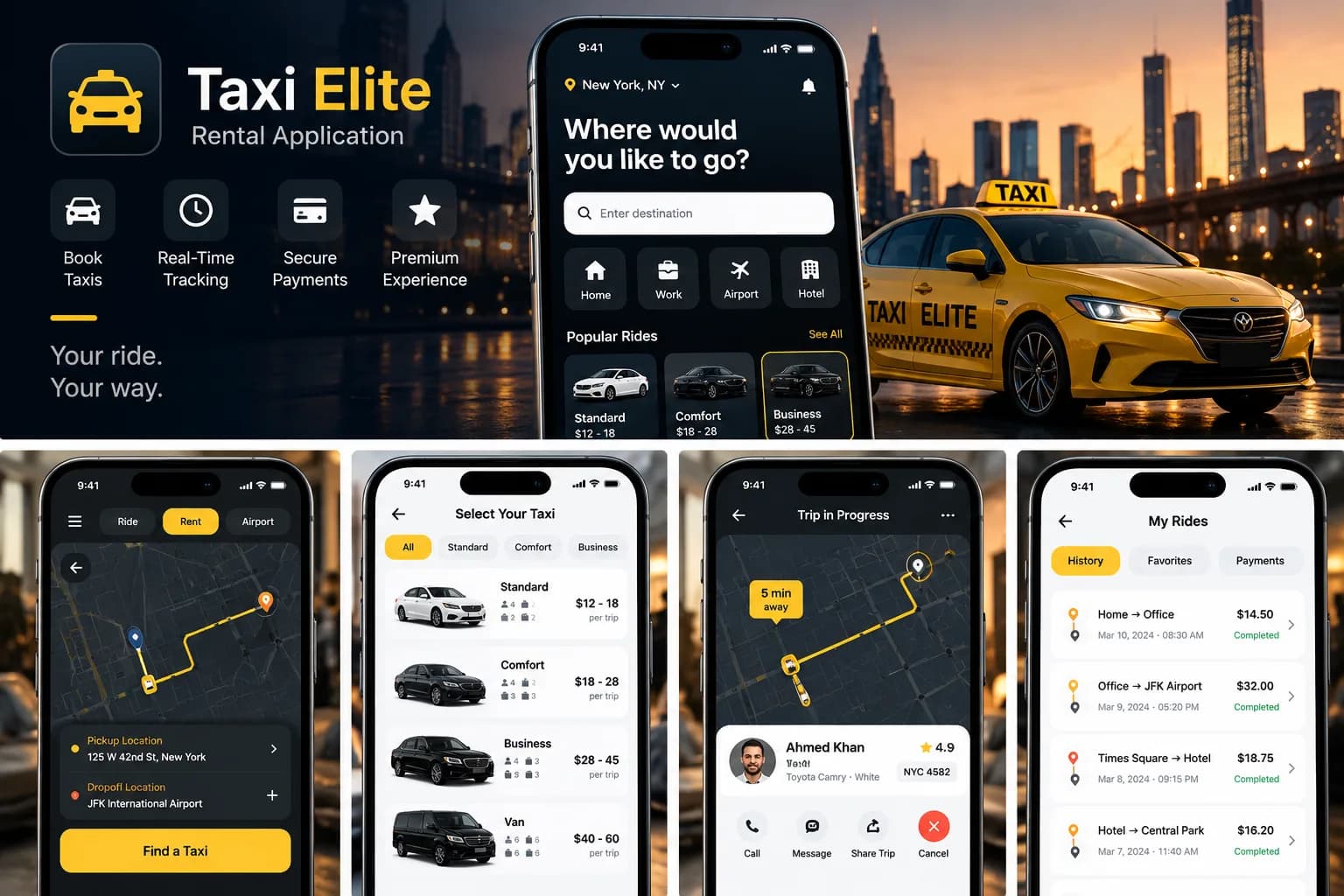
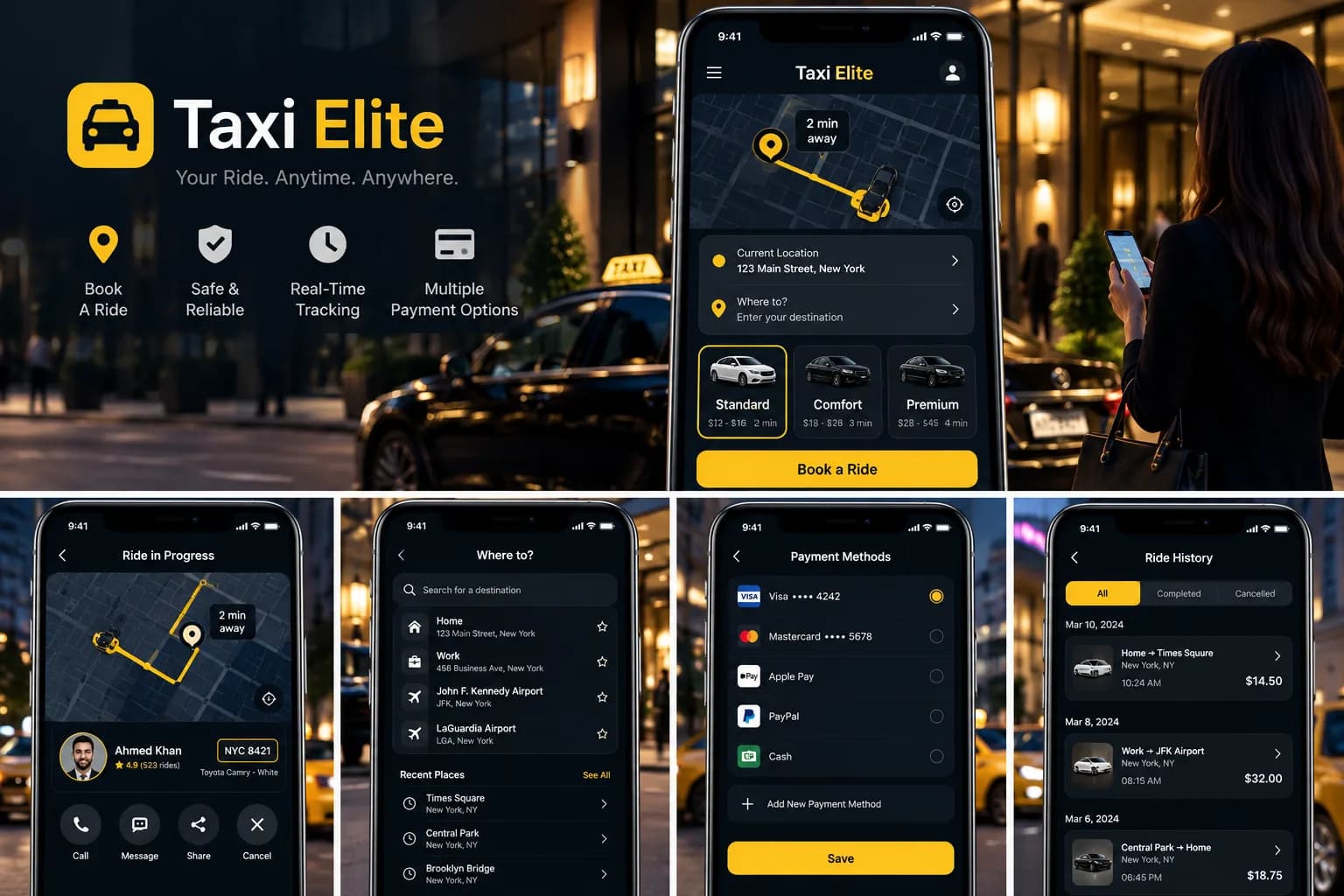
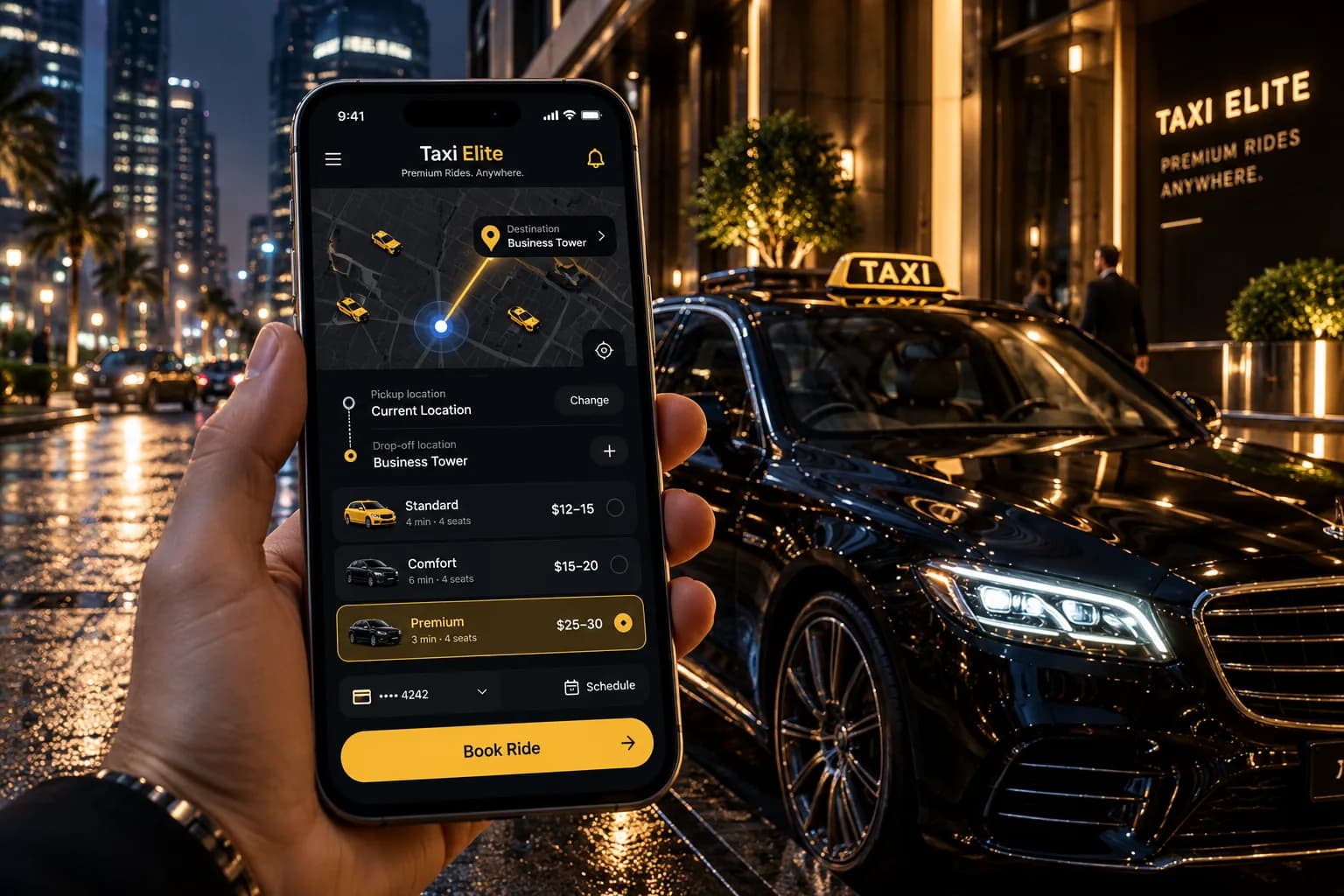
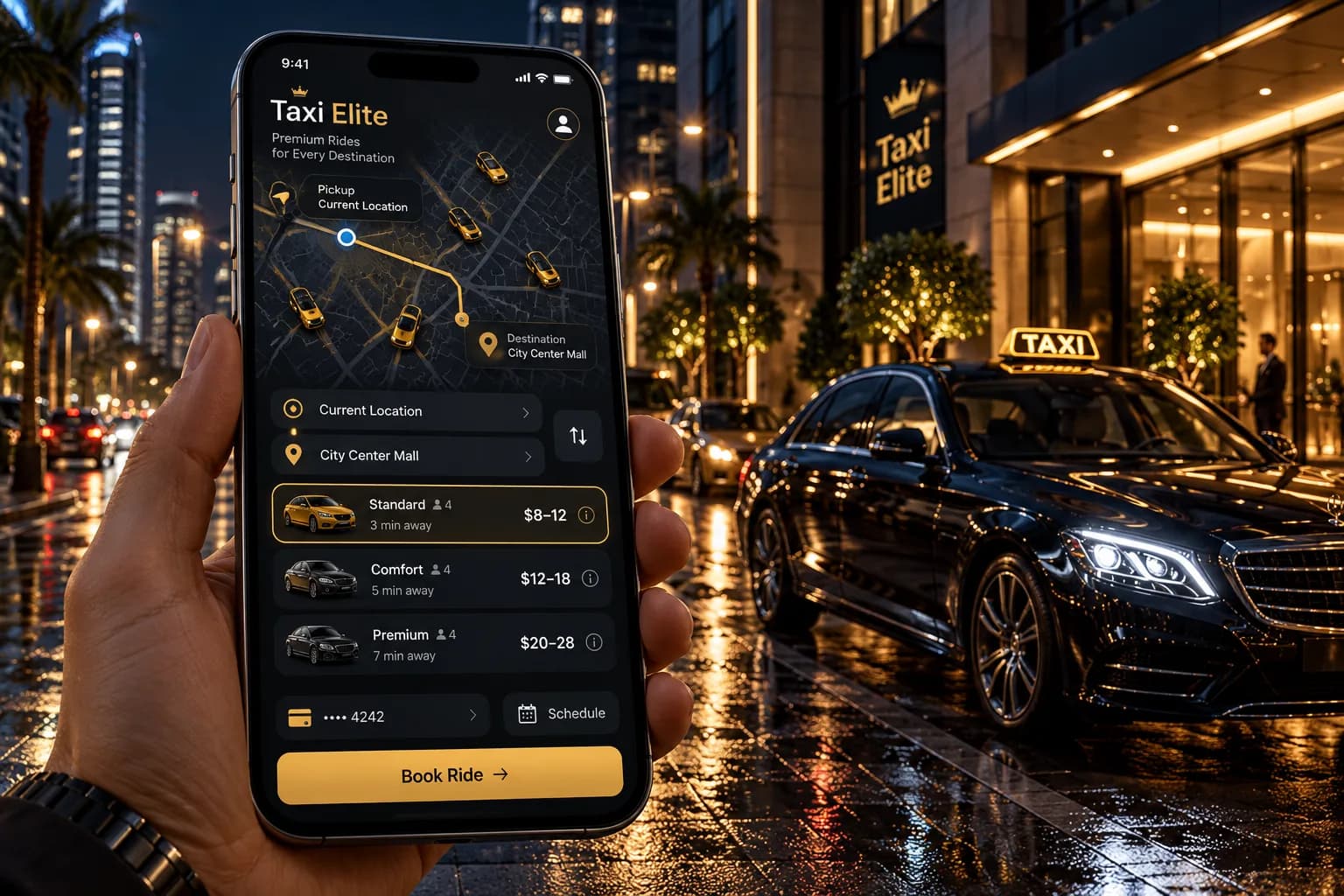
Users can enter their pickup and destination locations, view available vehicles, compare ride categories, review estimated fares, and book a taxi.
Real-Time Trip Experience
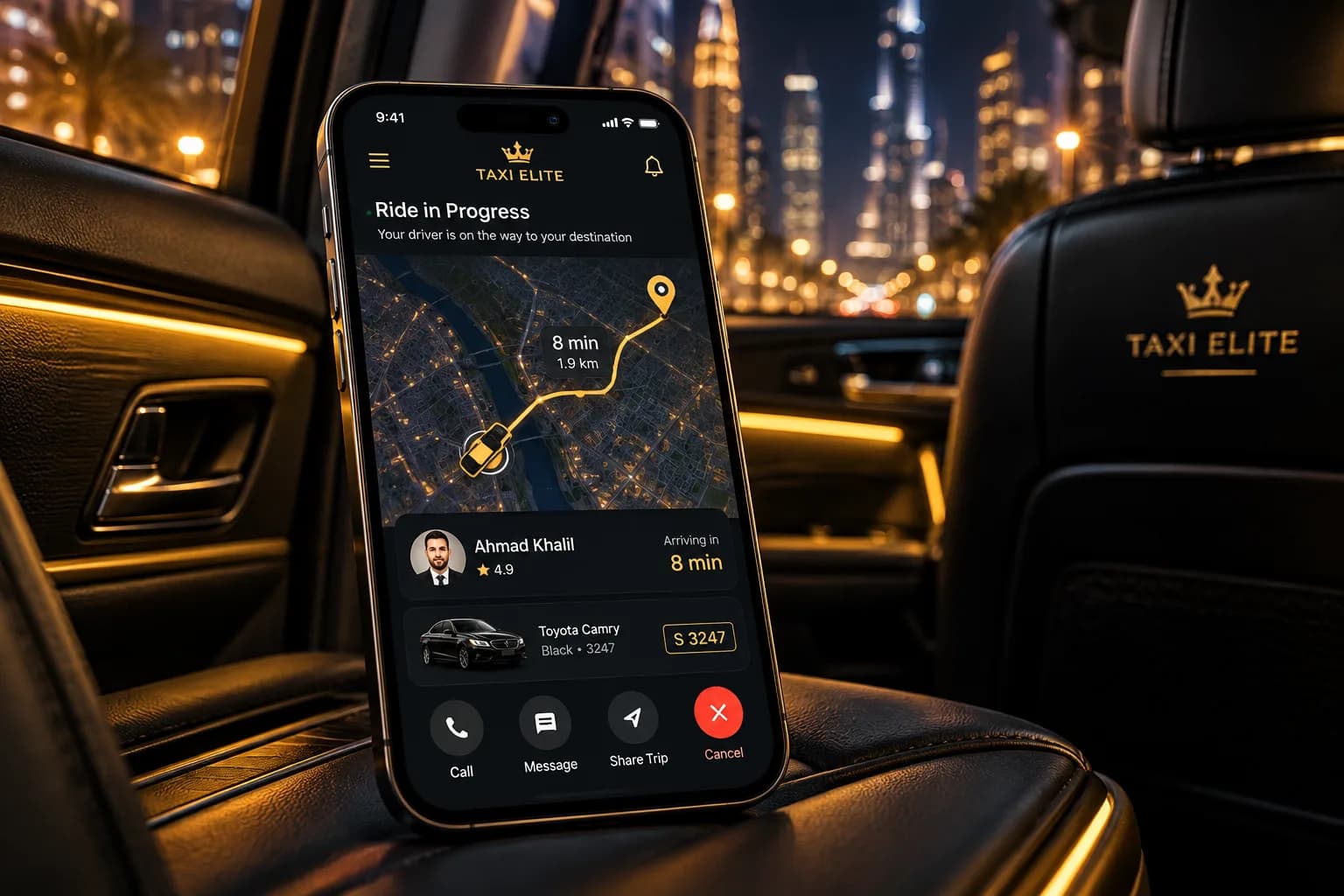
After booking, users can follow the driver's location, monitor estimated arrival time, view driver and vehicle information, and contact or share the trip when required.
Car Rental
The application also provides a rental workflow where users can select pickup and return dates, choose a location, browse available vehicles, and review rental pricing.
Ride History
Completed and cancelled rides are retained in a structured history so users can review previous transportation activity.
Architecture
The application can be structured around several interconnected services:
Mobile App → Booking Layer → Fleet & Driver Layer → Trip Management → Payment & History
User & Profile
Manages user information, preferences, payment methods, and transportation history.
Location & Routing
Handles pickup and destination information and provides the geographic context required for ride booking and tracking.
Vehicle & Fleet
Maintains available vehicle categories and their relevant attributes, including capacity, type, availability, and pricing.
Booking Management
Creates and manages taxi reservations while maintaining the lifecycle of each ride.
Driver & Trip Tracking
Connects an active booking with the assigned driver and vehicle while exposing real-time trip information to the customer.
Payment
Handles the selected payment method and associates payment information with the relevant ride or rental transaction.
Rental Management
Provides a separate workflow for date-based vehicle rentals, including pickup location, return date, vehicle availability, and pricing.
History
Maintains completed and cancelled transportation activities for later reference.
Intelligence layer
The application's intelligence comes primarily from location-aware logic, availability management, pricing rules, and state-driven transportation workflows.
Location Intelligence
The system uses pickup and destination information to establish the context of each booking.
Vehicle Matching
Available vehicle categories can be presented according to requirements such as capacity, vehicle type, availability, and estimated arrival.
Fare Estimation
Pricing can be calculated from transportation-specific parameters such as vehicle category, distance, duration, and applicable pricing rules.
Trip State Management
The system understands where a booking is within its lifecycle and exposes the appropriate actions and information at each stage.
Real-Time Tracking
An active ride can continuously update its location and estimated arrival information.
Rental Availability
Rental workflows use dates, locations, and vehicle availability to determine which vehicles can be offered to the customer.
Together, these mechanisms create a transportation platform that can respond dynamically to the current state of a ride rather than simply displaying static information.
Engineering decisions
State-Driven Booking Architecture
The ride lifecycle is represented through explicit states, making it easier to control which actions are available at each stage of the journey.
Location-Centered UX
Pickup and destination information is treated as a primary part of the booking experience rather than secondary form data.
Vehicle Abstraction
Vehicles are presented through reusable categories, allowing different fleet types to be introduced without redesigning the entire booking flow.
Separation of Taxi and Rental Workflows
Although both services involve transportation, their booking models are different. Keeping them logically separated prevents the application from forcing both experiences into the same workflow.
Real-Time Trip Layer
Active rides are treated differently from historical rides, allowing the application to prioritize live location, ETA, driver information, and trip controls.
Transparent Pricing
Estimated pricing is displayed before the user commits to a booking, making vehicle categories easier to compare.
Mobile-First Design
The interface prioritizes touch interaction, clear visual hierarchy, and fast access to the most important transportation actions.
Extensible Service Architecture
The platform can later be expanded with driver applications, fleet management, dispatching, notifications, promotions, ratings, geofencing, payment gateways, and advanced route optimization.
Challenges
1. Location-Based Booking
A taxi application depends heavily on accurate pickup and destination information. The interface needs to make location selection clear while keeping the booking flow fast.
2. Vehicle Selection
Different users have different transportation requirements. The application needs to present vehicle categories, capacity, estimated arrival, and pricing without making comparison difficult.
3. Real-Time Trip Tracking
Once a ride has been booked, users expect visibility into where the vehicle is and when it will arrive. Representing this information clearly creates both technical and UX challenges.
4. Fare Transparency
Estimated fares need to be presented before booking so users can understand the expected cost of different vehicle categories.
5. Connecting Booking and Trip States
A ride moves through multiple states:
Available → Requested → Confirmed → Driver En Route → In Progress → Completed / Cancelled
Managing these transitions consistently is an important part of the application architecture.
6. Supporting Both Taxi Booking and Car Rental
Taxi rides and car rentals have fundamentally different workflows. Taxi booking is typically time-sensitive and location-driven, while rentals involve dates, availability, vehicle selection, and longer-duration reservations.
7. Mobile Interaction
Transportation decisions are often made while users are moving between locations. The interface therefore needs to make important actions accessible with minimal interaction.
Results
The project establishes a unified taxi booking and vehicle rental mobile experience covering the core transportation journey from location selection to trip completion.
It brings together:
- Taxi booking
- Vehicle selection
- Fare estimation
- Location-based pickup
- Real-time trip tracking
- Driver information
- Payment methods
- Ride history
- Vehicle rental
The result is a structured transportation experience where users can manage both short-distance rides and longer-term vehicle rentals from the same mobile platform.
The foundation can be extended into a more comprehensive mobility platform with driver-side applications, automated dispatching, fleet management, real-time notifications, dynamic pricing, ratings, loyalty programs, and advanced route optimization.
Media
Related projects
Mobile
Mobile
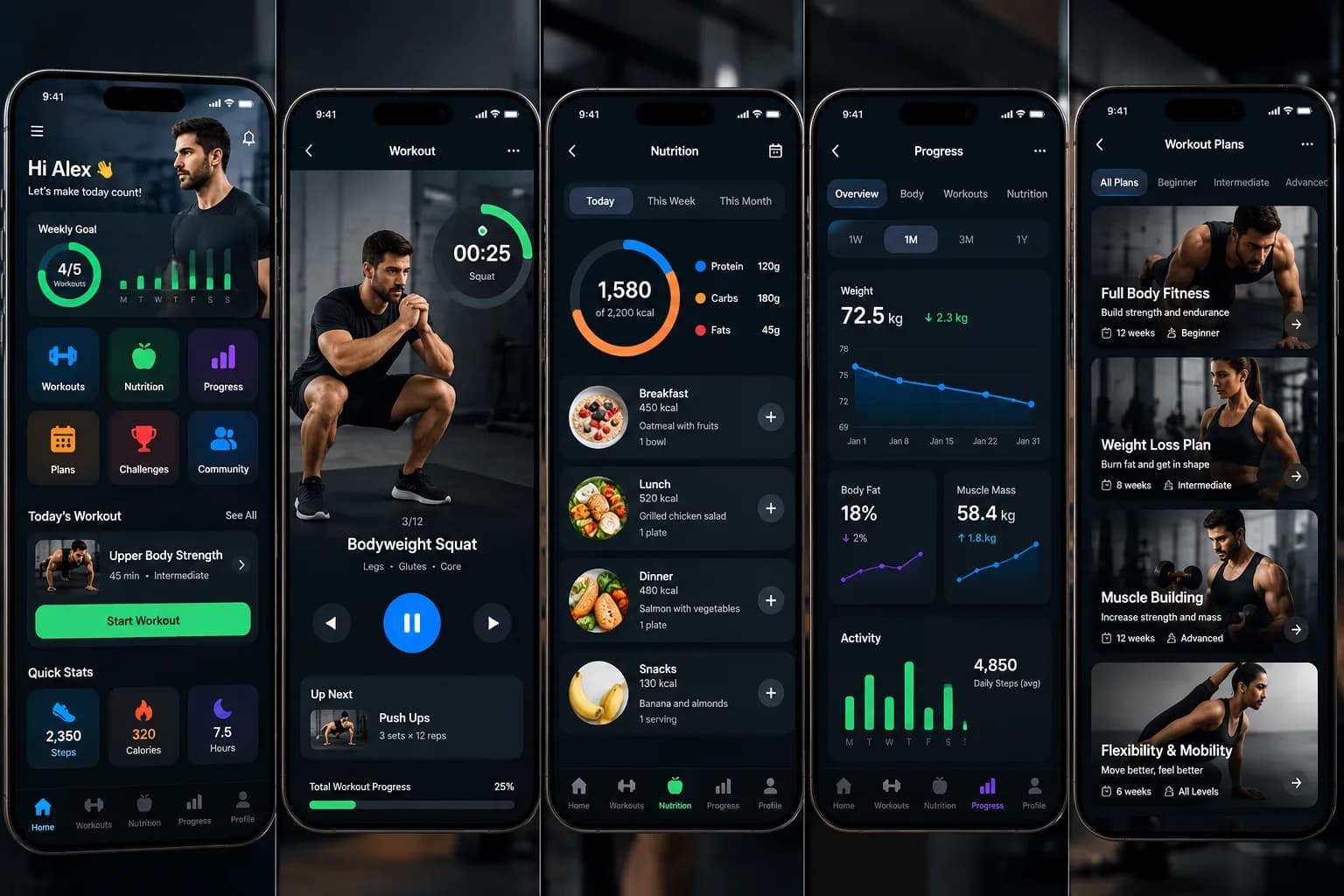
Fitness Mobile Application — Personalized Workout & Progress Tracking
A dynamic fitness mobile application that helps users follow personalized workout plans, track nutrition, monitor progress, and stay consistent with their health and fitness goals.
Stack
Artificial intelligence
AI Intelligence Project Management System
AI-powered enterprise project and task management platform with intelligent task generation and smart assignment.
Stack