Mobile
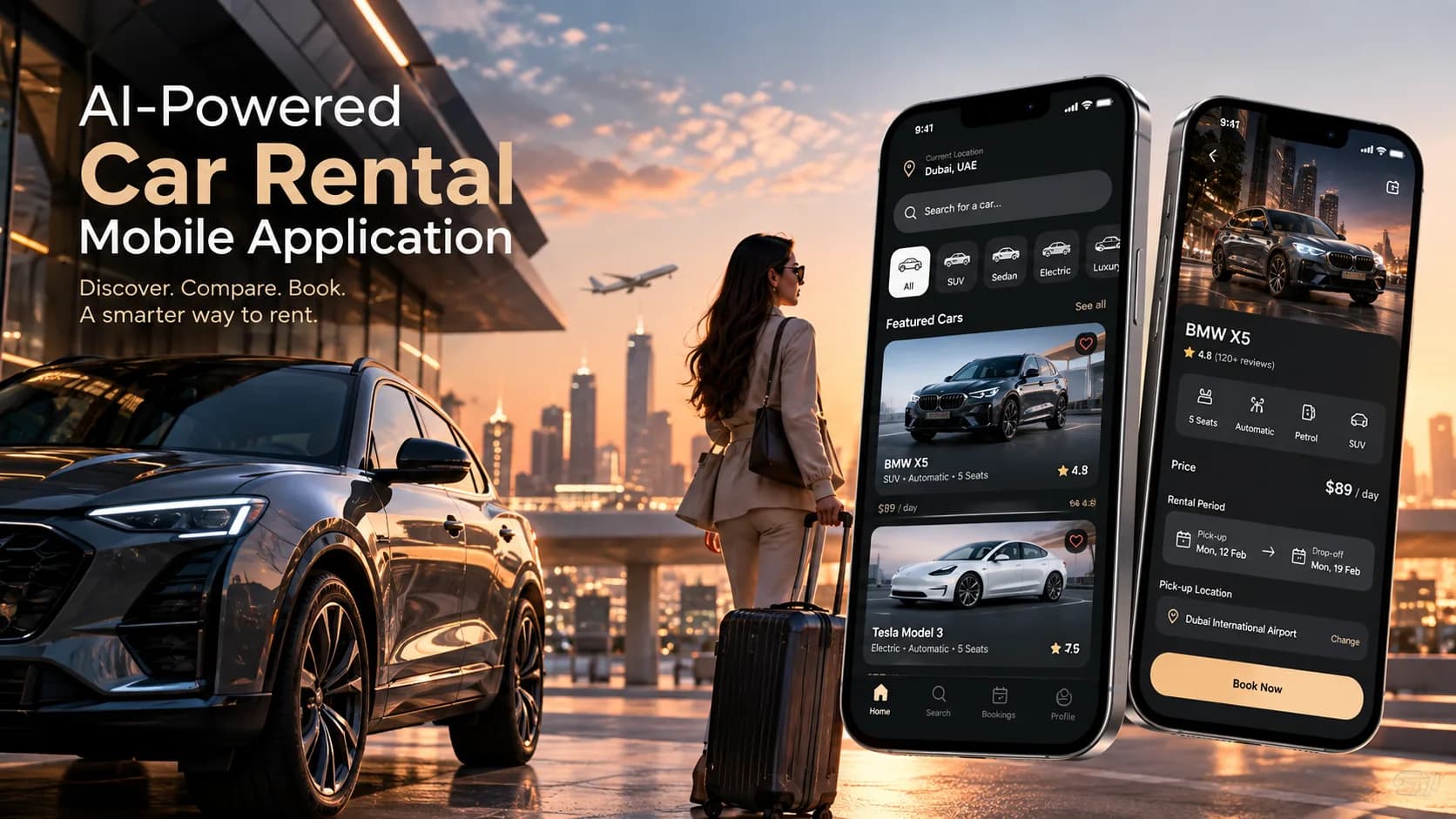
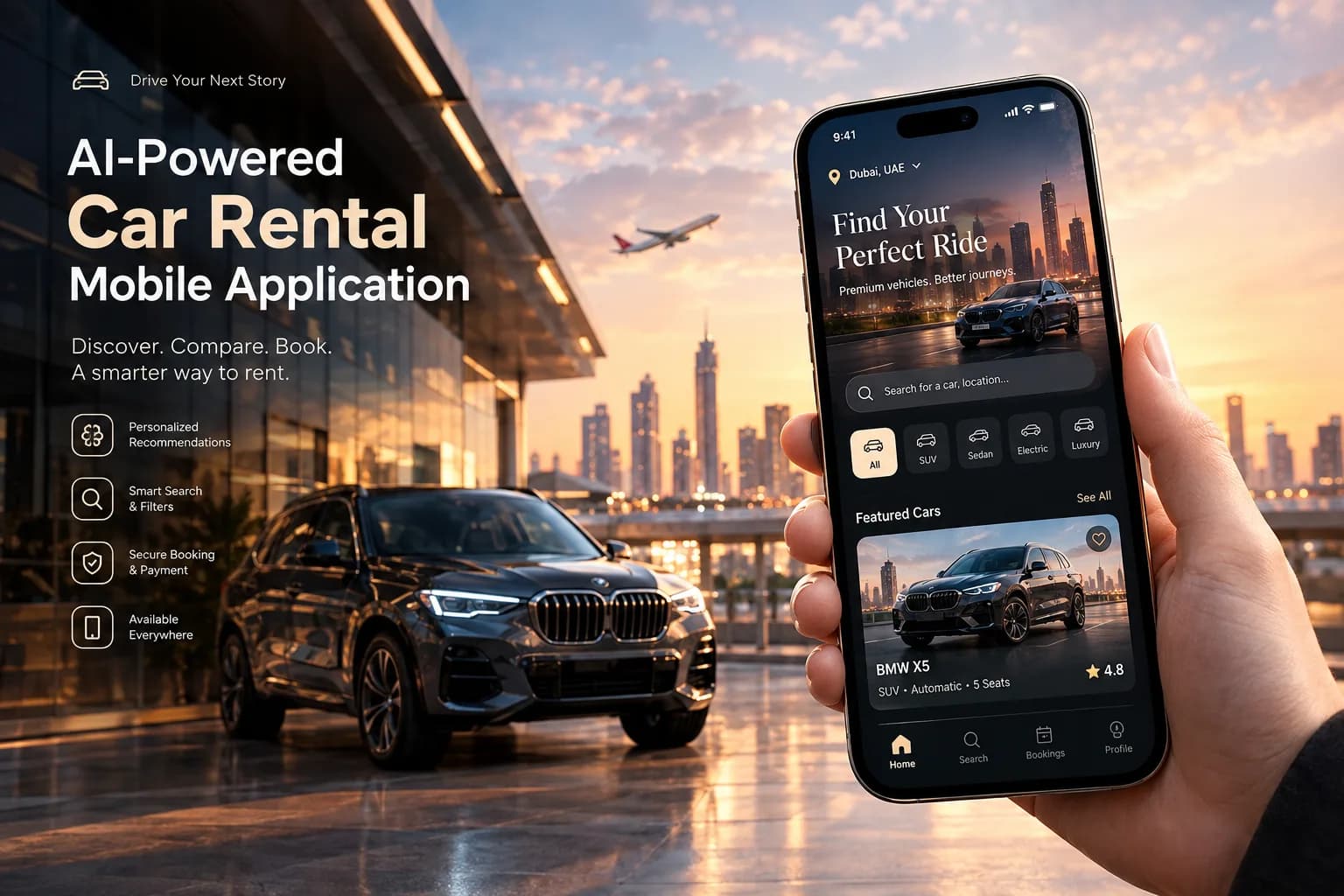
AI-Powered Car Rental Mobile Application
A modern AI-powered car rental application designed to simplify vehicle discovery, comparison, booking, and personalized recommendations through an intuitive mobile experience
- Evidence
- Verified work
- Role
- Project Manager&AI
- Timeline
- Oct 2023
- Category
- Mobile
Overview
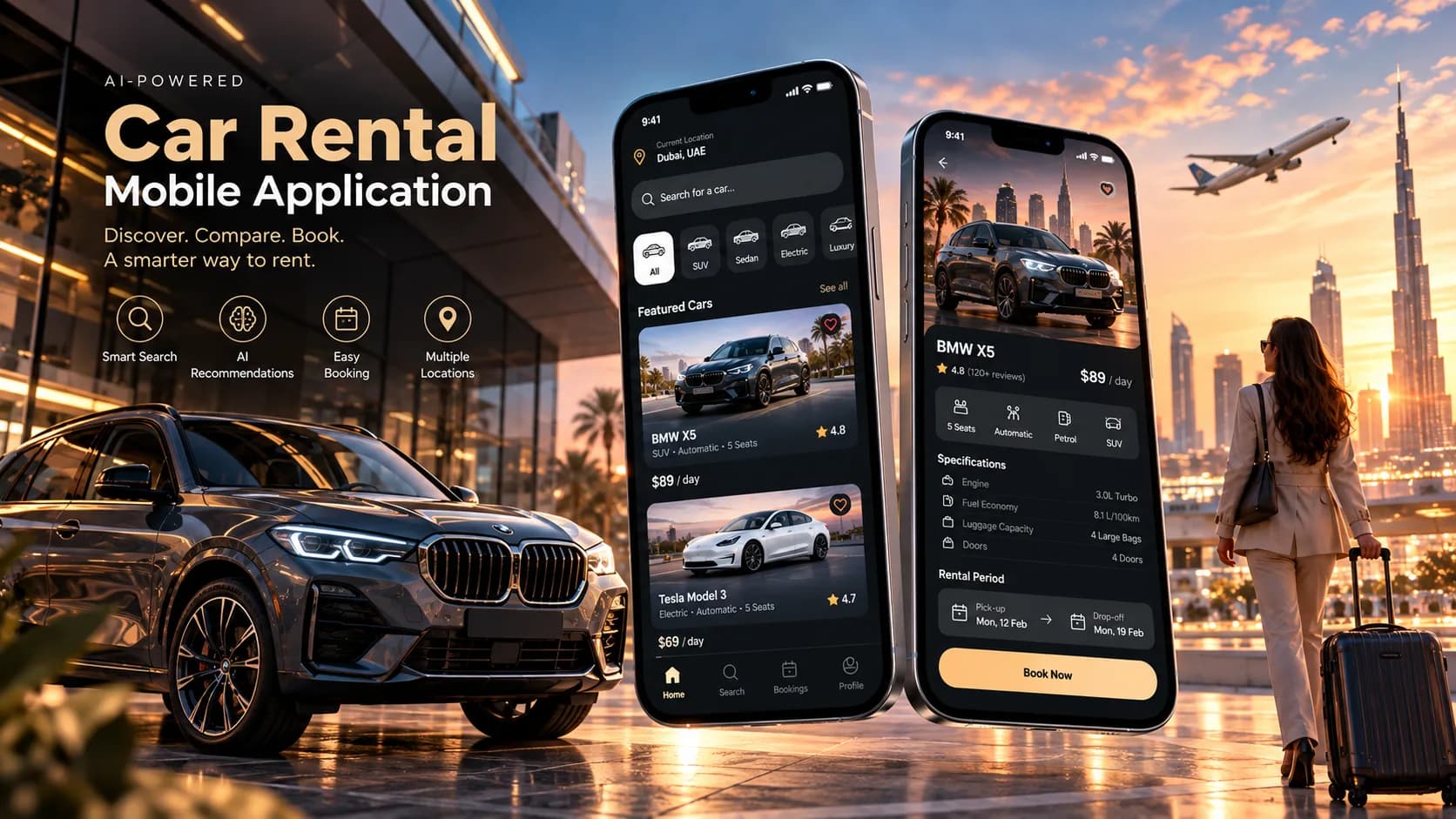
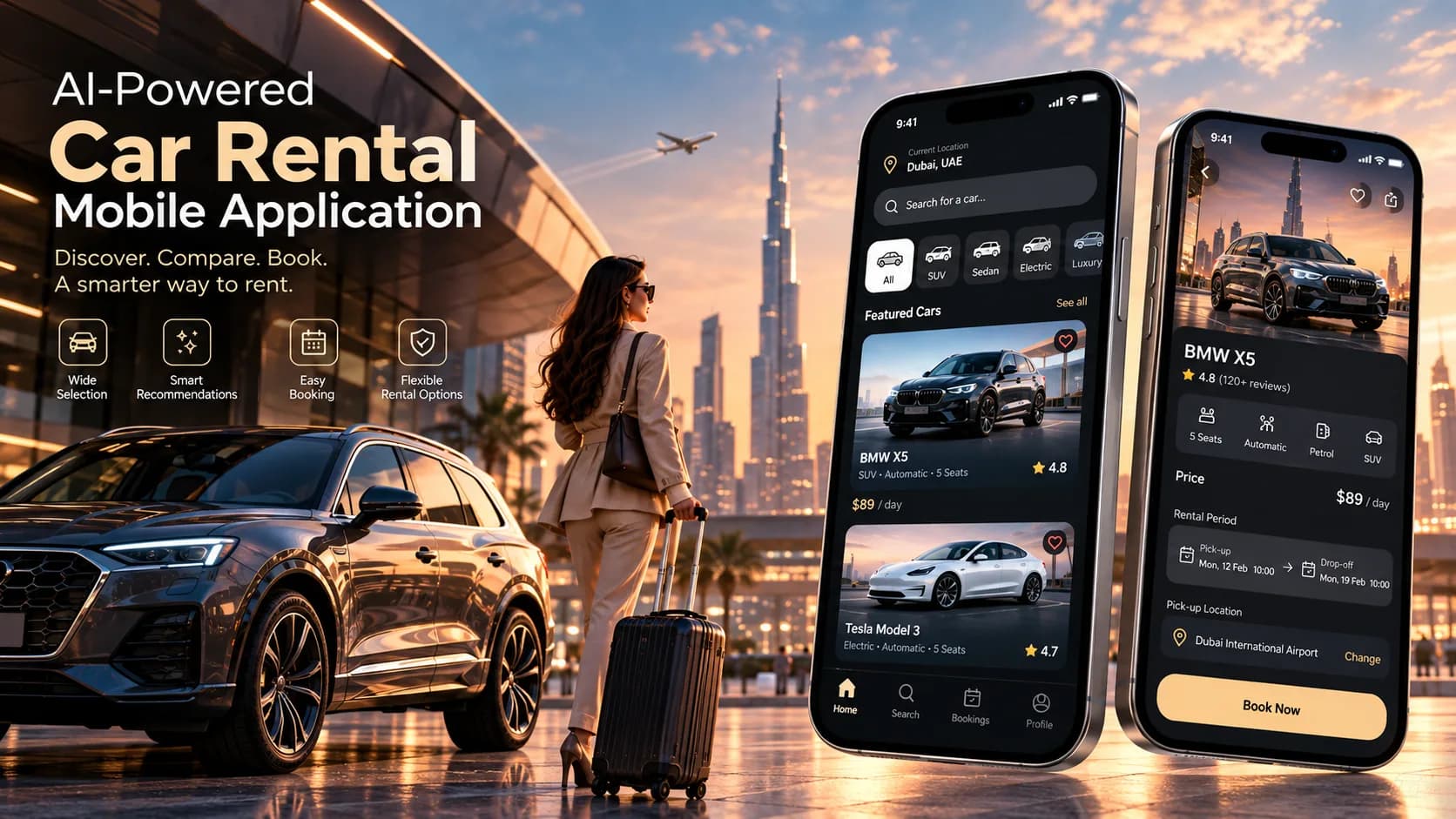
A mobile-first car rental platform designed to make the entire rental journey simple, fast, and intelligent. Users can discover available vehicles, explore detailed specifications, compare options, review rental information, and complete the booking journey through a streamlined interface. The experience combines a clean mobile UX with intelligent discovery and personalization to reduce friction throughout the rental process.
Problem
Traditional car rental experiences often require users to navigate large inventories, compare vehicles manually, interpret complex rental information, and move through fragmented booking flows. This can make finding the right vehicle unnecessarily time-consuming, especially when users have specific requirements around price, vehicle type, capacity, location, or rental duration.
The goal was to create a focused mobile experience that reduces this complexity and helps users move from vehicle discovery to an informed rental decision with minimal friction.
Constraints
The main constraints involved balancing a large amount of vehicle and rental information with a lightweight mobile interface. The experience needed to remain intuitive across different screen sizes while supporting filtering, availability, pricing, vehicle specifications, user preferences, and booking-related states.
The architecture also needed to remain scalable enough to support additional vehicle categories, locations, rental rules, personalization capabilities, and future integrations without requiring major changes to the core user experience.
Approach
The product was approached as an end-to-end mobile experience rather than simply a vehicle catalog. The interface was structured around the user's primary journey: discovering suitable vehicles, understanding their specifications, comparing alternatives, selecting rental parameters, and progressing through booking.
The experience combines structured search and filtering with intelligent recommendations, clear vehicle information, contextual actions, and a consistent design system. Each interaction was designed to reduce cognitive load while keeping important rental information accessible at the right moment.
Architecture
The application follows a modular architecture that separates presentation, application logic, data access, and intelligent decision-making capabilities. Core domains such as vehicles, users, search, availability, pricing, reservations, and recommendations are isolated to keep the system maintainable and extensible.
The mobile interface communicates with backend services through structured APIs, while reusable domain and UI components provide consistency across the application. The architecture is designed to support future integrations such as payment providers, mapping services, notifications, identity verification, and external vehicle inventory systems.
Intelligence layer
The intelligence layer is designed to improve vehicle discovery and personalization rather than add unnecessary complexity to the interface. User preferences, search context, vehicle attributes, and rental requirements can be used to identify relevant vehicles and surface more useful recommendations.
The system can be extended with intelligent search, preference-based vehicle matching, recommendation ranking, natural-language queries, and contextual suggestions, creating a more personalized discovery experience while keeping the final decision under the user's control.
Engineering decisions
The implementation prioritizes modularity, predictable state management, reusable components, clear domain boundaries, and API-driven communication. Search and filtering logic are designed to remain independent from the presentation layer, allowing the same business rules to evolve without tightly coupling them to specific screens.
The interface also uses progressive disclosure: essential information is presented first, while deeper specifications and secondary actions remain available without overwhelming the primary rental journey.
Challenges
One of the main challenges was presenting complex rental information without creating a visually dense experience. Vehicle specifications, pricing, availability, filters, rental conditions, and user preferences all need to coexist while preserving a clear hierarchy.
Another challenge was designing the intelligence layer so that recommendations enhance discovery without making the application feel unpredictable or opaque. The solution emphasizes transparent criteria, contextual suggestions, and user-controlled decisions.
Results
The resulting experience provides a structured and modern mobile journey from vehicle discovery to rental selection. The product architecture creates a foundation for scalable vehicle inventory, personalized discovery, intelligent recommendations, and future booking integrations while maintaining a focused and consistent user experience.
The primary design objective is to make car rental feel less like searching through an inventory and more like receiving a guided, personalized vehicle discovery experience.
Media


Related projects
Mobile
Mobile
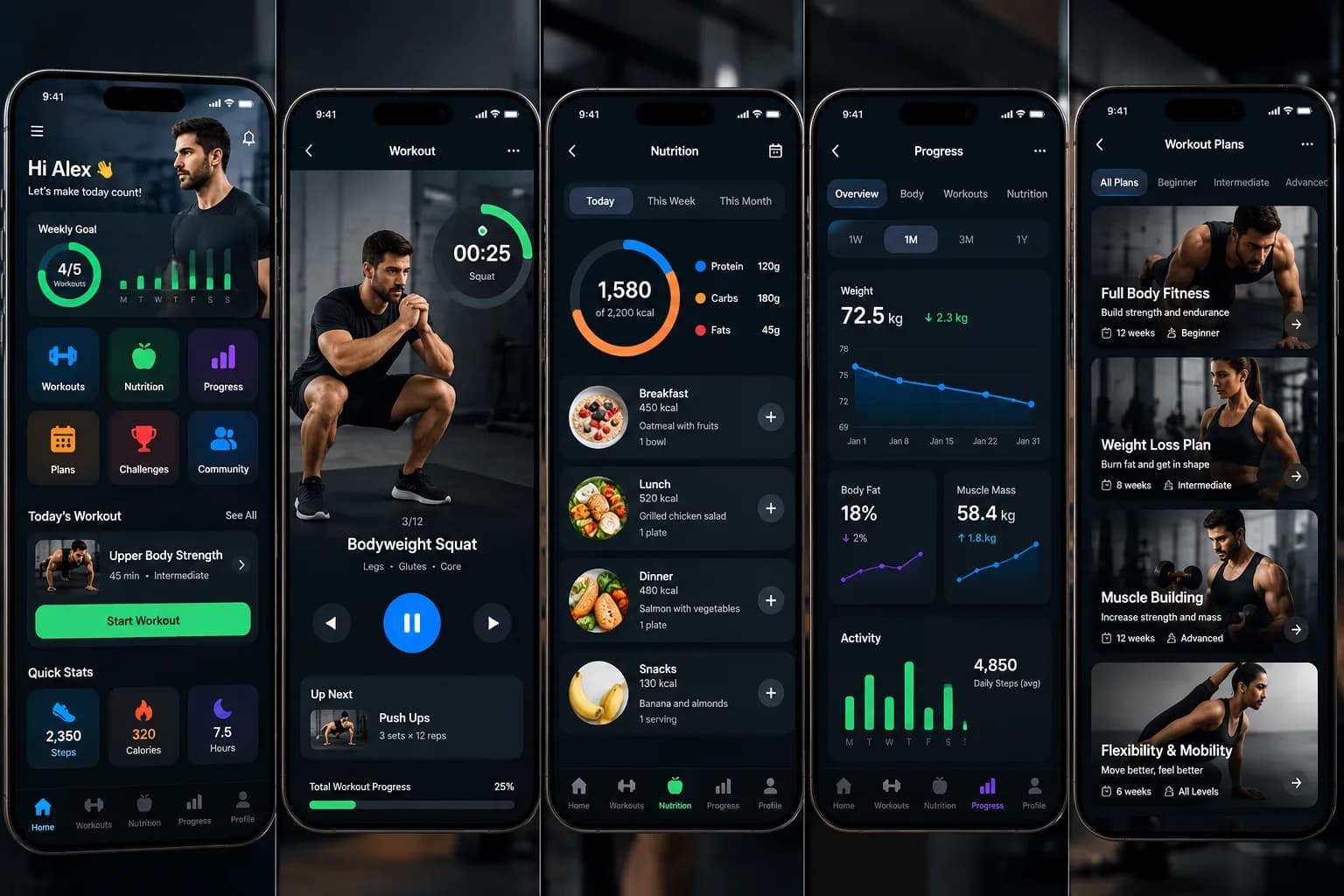
Fitness Mobile Application — Personalized Workout & Progress Tracking
A dynamic fitness mobile application that helps users follow personalized workout plans, track nutrition, monitor progress, and stay consistent with their health and fitness goals.
Stack
Mobile
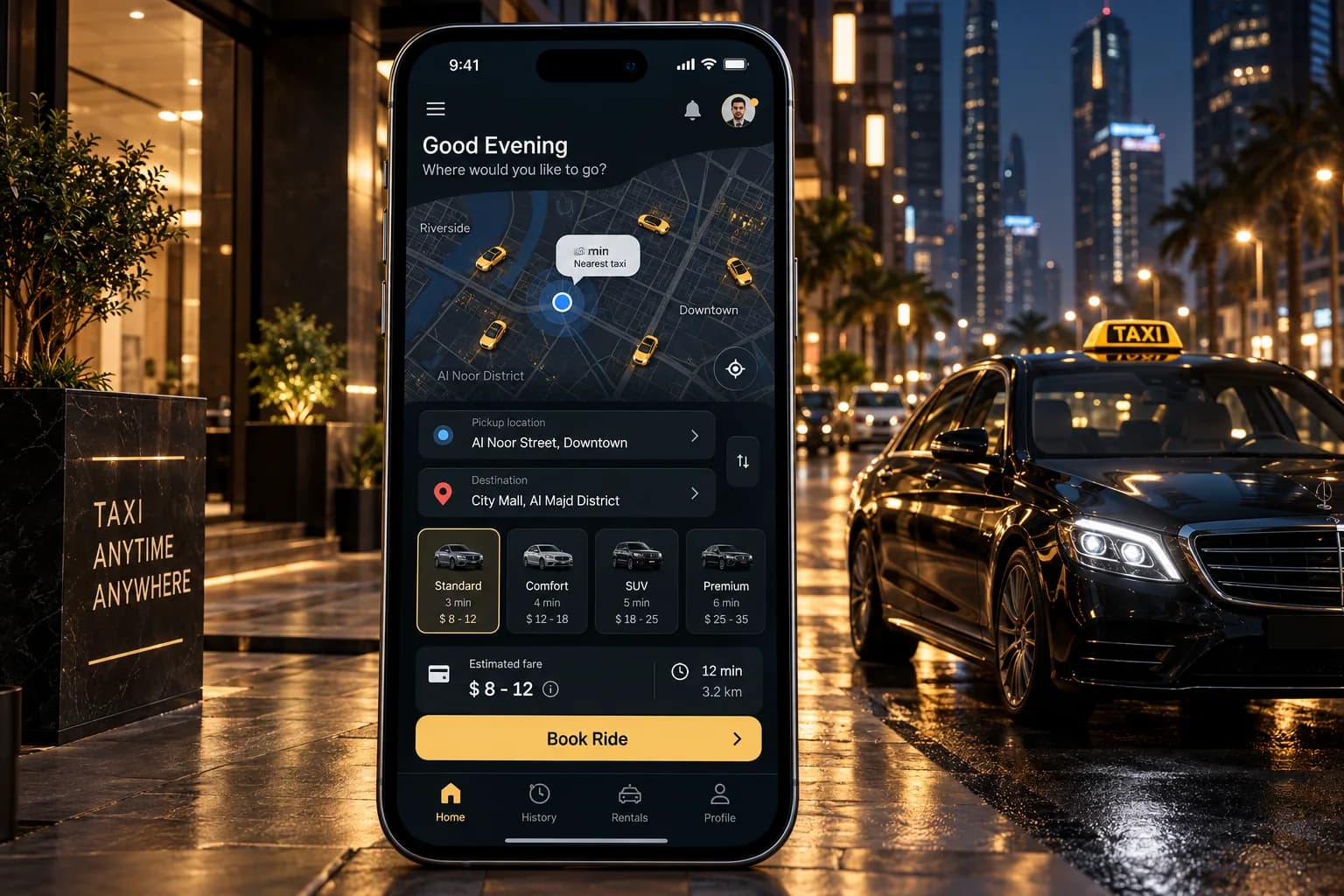
Taxi Elite Application — Taxi Booking & Car Rental Mobile App
A mobile taxi booking and car rental application designed to simplify ride booking, vehicle selection, real-time trip tracking, payments, and rental management.
Stack